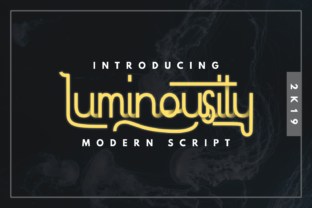
Luminousity: A Friendly, Modern Font
Luminousity is a typeface designed to feel both fresh and approachable — like a well-chosen word that lands just right. It’s not overly formal, but it’s never sloppy. Its curves are gentle, its spacing generous, and its letterforms carry subtle personality without sacrificing clarity. Whether you’re typing a headline for your small business website or designing a handout for your classroom, Luminousity helps your message feel human first.
What Makes Luminousity Stand Out
At its core, Luminousity balances modern minimalism with warmth. Unlike many geometric sans-serifs that can feel cool or distant, this font has soft terminals, slightly rounded corners, and open apertures — especially noticeable in letters like a, e, and s. These small details make reading smoother at smaller sizes and give even short text blocks a welcoming tone.
It’s also highly legible across devices. Whether viewed on a phone screen, printed on a postcard, or projected during a workshop, Luminousity maintains its friendliness and structure. That versatility matters — especially if you’re juggling multiple formats as a freelancer, educator, or small business owner.
Where Luminousity Fits Naturally
You don’t need to be a designer to benefit from Luminousity. Think about the everyday moments where typography quietly shapes perception:
- Small business branding — A local café might use Luminousity for its menu board and Instagram captions to reinforce a relaxed, community-focused vibe.
- Educational materials — Teachers often choose fonts that reduce visual fatigue. Luminousity’s clear letterforms help students focus on content, not decoding shapes.
- Blogs and newsletters — Readers scroll fast. A friendly, readable font like Luminousity encourages them to pause and stay longer — especially when paired with thoughtful line height and contrast.
- Personal projects — Wedding invitations, hobbyist zines, or even a family recipe book gain quiet charm when set in Luminousity. It feels intentional, not generic.
It works especially well alongside neutral typefaces (like a clean serif for headings or a restrained sans-serif for body copy), letting it shine without overwhelming layouts.
Real-World Uses You Can Try Today
Here’s how people actually use Luminousity — no design degree required:
- Create a one-page website banner — Type “Welcome to Our Studio” in Luminousity at 48px, pair it with a soft background color, and watch how instantly inviting it feels.
- Design printable workshop handouts — Use it for titles and section headers while keeping body text in a highly readable companion font. The contrast adds rhythm without confusion.
- Make social media graphics more relatable — Try Luminousity for quote overlays on Instagram Stories. Its openness prevents crowding on small screens.
- Label physical products thoughtfully — A handmade soap brand used Luminousity on ingredient tags. Customers told them it felt “honest and kind” — a direct reflection of their values.
None of these require advanced tools. Most free and paid design platforms — including Canva, Figma, Adobe Express, and even Google Docs (with web font integration) — support Luminousity.
Things to Keep in Mind Before You Use It
Luminousity shines brightest when matched with intention — not just aesthetics. Here are practical considerations:
- Weight variety matters — Check whether the version you’re using includes light, regular, medium, and bold weights. Some free variants only offer one or two. Having options lets you create visual hierarchy without switching fonts.
- License clarity — If you’re using Luminousity commercially (e.g., on a client’s logo or a product label), verify the license permits that use. Many versions allow personal and commercial use, but always double-check the source.
- Pairing wisely — While Luminousity stands alone beautifully, avoid pairing it with other highly decorative fonts. Its strength is approachability — so balance it with something grounded, like a classic serif or a simple sans-serif with tighter proportions.
- Accessibility readiness — Luminousity performs well for most readers, but always test contrast (text vs. background) and ensure font size stays above 16px for body copy. Small tweaks here make a real difference for people with low vision or reading differences.
Why It Resonates With So Many People
Typography isn’t just about looking good — it’s about signaling care. When you choose Luminousity, you’re subtly telling your audience: This matters. You matter. I took time to get this right.
That’s why entrepreneurs use it for pitch decks — it conveys confidence without arrogance. Why educators use it for student-facing slides — it feels inclusive, not intimidating. Why bloggers use it in email subject lines — it stands out in crowded inboxes without shouting.
It doesn’t try to be everything. It doesn’t chase trends. Instead, Luminousity offers consistency with character — reliable enough for daily use, distinctive enough to leave an impression.
A Final Thought for Beginners
If you’re new to choosing fonts, start simple: pick one place where your current type feels off — maybe your newsletter looks stiff, or your presentation slides feel impersonal. Swap in Luminousity for just the headlines or quotes. See how it changes the mood. You’ll likely notice it feels lighter, warmer, more like *you*.
Fonts shape how people experience your ideas before they even read the first sentence. Luminousity makes that first impression kind, clear, and quietly confident — exactly what thoughtful communication needs.