Batique: A Handwriting Script Font Rooted in Javanese Batik Tradition
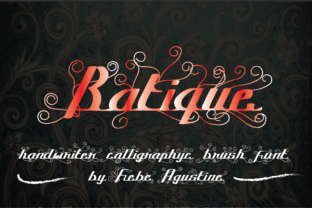
Batique is more than a font—it’s a bridge between cultural heritage and modern design practice. Designed as a beautiful handwriting script, it draws direct inspiration from the intricate motifs, rhythmic symmetry, and organic flow of traditional Javanese batik. Each glyph reflects the hand-drawn precision and expressive variation found in wax-resist dyeing techniques—subtle swashes echo the curl of a canting tool, while balanced spacing honors the deliberate pacing of artisanal craft. For professionals who value both authenticity and utility, Batique offers a rare combination: visual distinction grounded in real-world tradition.
Where Batique Fits in Your Design Workflow
Fonts rarely exist in isolation—they enter projects at specific inflection points. With Batique, that moment is often early: during brand identity definition, campaign concepting, or product naming. Its character makes it unsuitable for body text or data-heavy interfaces, but ideal for moments demanding warmth, intention, and human presence. Think of it as the first impression layer—not the foundation, but the signature on top.
Before launching a logo project, designers often explore typographic mood boards. Batique belongs there—not as a default, but as a considered option when the brief calls for approachability paired with cultural resonance. It works especially well for businesses rooted in wellness, craftsmanship, education, or creative services where storytelling matters more than speed or scalability alone.
Practical Use Cases Across Platforms and Outputs
Batique thrives where personality outweighs neutrality. On social media, it adds cohesion to branded quote graphics—especially Instagram carousels or Pinterest pins highlighting values, founder stories, or seasonal collections. Because its letterforms carry rhythm and weight, even short phrases (“Handmade with care”, “Rooted in tradition”) gain quiet authority without shouting.
For physical outputs, Batique performs reliably across print and embroidery. When applied to t-shirts, tote bags, or packaging, it avoids the flatness common to many script fonts—the subtle variation in stroke contrast helps it translate cleanly to screen printing and DTG processes. Test prints at 120–150 DPI confirm legibility before bulk production; avoid using it smaller than 24pt in print or below 36px on web banners.
In digital branding, pair Batique intentionally. Use it for headlines, subheadings, or logotypes only—and always follow with a highly legible sans-serif (like Inter, Poppins, or Lato) for supporting text. This pairing isn’t stylistic compromise; it’s functional sequencing. Batique sets tone; the secondary font delivers information. That division of labor improves scanability and reduces cognitive load.
Compatibility and Technical Integration
Batique ships in standard OpenType (.otf) format, compatible with Adobe Creative Cloud apps, Affinity Designer, Figma (via font syncing), and most desktop publishing tools. It includes ligatures and alternate characters—but these are opt-in features, not defaults. Enable them selectively, not globally. Overuse of swashes can undermine readability, especially in tight spaces like mobile app buttons or email subject lines.
When embedding Batique in websites, use @font-face with WOFF2 compression and include fallbacks. Avoid loading it on every page—limit usage to hero sections, testimonials, or branded landing pages where its impact justifies the file size. Most users won’t notice if it’s absent from blog post headers; they will notice if it slows down initial load time.
Preparing for Consistent Implementation
Consistency starts before you type a single word. Define clear usage rules within your brand guidelines: specify exact point sizes, color contrast ratios (aim for at least 4.5:1 against background), and prohibited contexts (e.g., “never used in legal disclaimers or navigation menus”). These constraints aren’t limitations—they’re quality controls that preserve Batique’s strength: its distinctiveness.
Organize assets thoughtfully. Store Batique files in a shared team folder labeled with version date and license type. Include a simple PDF cheat sheet showing recommended pairings, spacing guidelines, and examples of overuse versus effective use. When onboarding new designers or contractors, share this sheet—not just the font file. Context enables consistency far more than access does.
Workflow Examples You Can Adapt Today
- Small Business Launch: Use Batique for your business name in the logo and website header only. Apply your secondary font to all other interface elements—including pricing tables, FAQ accordions, and contact forms. This creates immediate recognition without sacrificing usability.
- Educational Content: In workshop handouts or course slides, apply Batique to section titles and key takeaways. Keep body copy in a clean, high-contrast sans-serif. The contrast reinforces hierarchy and supports learning retention through visual differentiation.
- Social Media Campaign: Build a reusable Canva template with Batique pre-loaded for quote graphics. Set fixed margins and line-height presets so contributors maintain spacing integrity—even when swapping quotes or images.
Long-Term Use and Quality Control
Batique gains value over time—not because it changes, but because your understanding of how to deploy it deepens. Revisit your usage rules every 6–12 months. Ask: Does this still reflect our voice? Are we leaning on it out of habit rather than intent? Has audience feedback revealed unexpected strengths (e.g., stronger engagement on handwritten-style Instagram Stories)?
Track performance where possible. If using Batique in email subject lines, compare open rates against control versions using neutral fonts. On landing pages, monitor bounce rate and time-on-page when Batique appears in headlines versus alternatives. These aren’t vanity metrics—they reveal whether the font supports your goals or distracts from them.
Also consider longevity of supply. Verify your license permits ongoing use across platforms, including future tools you may adopt (e.g., Notion templates, Framer sites, or AI-assisted design plugins). Some licenses restrict web embedding or SaaS integration—check before scaling.
Integration Beyond Typography
Batique doesn’t operate in a vacuum. Its effectiveness multiplies when aligned with other intentional choices: photography style (natural light, textured backgrounds), color palette (earthy tones, muted contrasts), and even tone of voice (warm but precise, respectful but confident). These elements form a cohesive system—Batique is one thread, not the whole fabric.
When collaborating with developers, provide them with rendered examples—not just font names. Export PNGs of Batique headings at multiple breakpoints so they understand intended spacing and sizing. When working with copywriters, clarify which phrases should carry Batique’s emphasis (e.g., taglines, value statements) versus those requiring clarity above all (e.g., CTAs, instructions).
Finally, remember that typography serves people—not trends. Batique resonates because it feels human-made, not algorithmically generated. That authenticity translates best when used sparingly, deliberately, and in service of something larger than itself: a brand’s mission, a learner’s understanding, or a customer’s sense of being seen.