Messy Nessy Duo: A Font Pair That Just Works—Without the Headache
If you’ve ever spent 45 minutes scrolling through font libraries trying to find two typefaces that feel like they belong together—not forced, not mismatched, just right—you’ll appreciate Messy Nessy Duo. It’s not another “trendy” pairing built for Instagram thumbnails and abandoned after launch. It’s a thoughtfully crafted font duo designed for people who need clarity, charm, and quiet confidence in their visuals—whether you’re labeling a small-batch honey jar, drafting a workshop handout, or refreshing your podcast logo.
What Exactly Is Messy Nessy Duo?
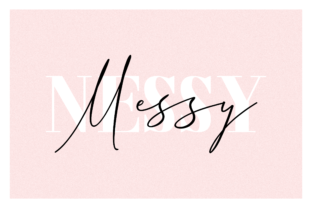
Messy Nessy Duo includes three complementary fonts in one package: two signature-style versions (one slightly bolder, one more delicate) and one refined serif companion. The signatures carry warmth and personality—think handwritten elegance, not shaky penmanship—and the serif grounds them with structure and readability. Together, they create contrast without conflict: soft but intentional, distinctive but never distracting.
You don’t need design training to use it well. The pairings are pre-tested and harmonized. Kerning is tuned, x-heights align, and weight relationships make hierarchy intuitive—not something you have to fix in Illustrator before lunch.
Where It Fits Naturally (and Where It Doesn’t)
Messy Nessy Duo shines where human tone matters more than corporate polish. It’s not ideal for dense legal disclaimers or data-heavy dashboards—but it’s perfect when you want your audience to feel seen, not scanned.
- Small business branding: A ceramicist uses the bold signature for her shop name on a matte black business card, and the serif for her tagline (“Hand-thrown in Portland since 2021”). Customers remember the name—and the feeling.
- Educational materials: A high school history teacher replaces generic PowerPoint headers with Messy Nessy Duo. Students report slides feeling “less like homework, more like a story”—especially when paired with archival photos and minimal bullet points.
- Digital newsletters: A freelance writer swaps her default sans-serif subject lines for the lighter signature version. Open rates tick up—not because of magic, but because her email preview now looks like a note from someone she knows, not a broadcast.
- Packaging & labels: A kombucha brand uses the duo across bottle neck tags (signature), ingredient lists (serif), and seasonal limited-edition sleeves (both). Shelf impact improves—not from loud colors, but from consistent, approachable typography that signals craft, not clutter.
Why Designers, Educators, and Entrepreneurs Reach for It Again
It solves a quiet but persistent problem: the gap between “I want it to feel personal” and “I don’t have time to finesse spacing, weight balance, or fallback fonts.” Messy Nessy Duo bridges that gap without demanding extra steps.
A freelance illustrator building her first website doesn’t need to learn OpenType features to get good results. She picks the bold signature for her headline (“Welcome to my studio”), the serif for body text, and calls it done—knowing both fonts render cleanly on iOS, Android, and desktop, even with basic webfont loading.
A homeschool parent designing weekly learning trackers uses the light signature for activity titles (“Nature Journaling,” “Math Puzzle Time”) and the serif for instructions. Her kids recognize the format instantly—not because it’s flashy, but because it’s calm, consistent, and legible at a glance.
Even seasoned designers reach for it when speed and sincerity matter more than experimentation—like updating a nonprofit’s donor thank-you cards last-minute before a board meeting. No second-guessing. No “does this look trustworthy?” Yes, it does.
Realistic Things to Keep in Mind Before You Use It
Messy Nessy Duo isn’t a universal fix—and that’s part of its strength. Here’s what helps it land well:
- Think context over coverage: It works beautifully in headlines, logos, short quotes, and signage—but avoid long paragraphs in the signature versions. Let the serif carry extended text. Your readers will thank you.
- Test color contrast early: The signature fonts have subtle texture and variable stroke weight. On light backgrounds with low-contrast colors (e.g., pale grey on off-white), fine details can soften. Try testing print proofs or screen zooms at 150% before finalizing.
- Consider your audience’s expectations: A fintech startup launching a B2B dashboard might find Messy Nessy Duo too warm for its compliance-heavy interface. But that same startup’s internal culture newsletter? Perfect fit. Match tone to purpose—not just aesthetics.
- Licensing is straightforward—but check your use case: The standard license covers most small-to-midsize projects: websites (with proper @font-face setup), PDFs, social graphics, merch, and packaging. If you’re embedding it into a SaaS app or reselling templates commercially, verify extended rights. Most users won’t need to—but it’s worth 60 seconds to confirm.
How It Fits Into Real Workflows—Not Just Mood Boards
This isn’t a font you download and forget in a folder. People keep coming back because it slots cleanly into tools they already use:
- In Figma, the OpenType features (like stylistic alternates and ligatures) activate automatically—no manual switching needed for polished results.
- In Canva, uploading the .OTF files lets you use both signature weights as distinct text styles—so you can build reusable brand templates without workarounds.
- For printers and letterpress studios, the clean vector outlines hold up sharply even at 6pt on recycled kraft paper—no hint of blurriness or ink spread.
- Bloggers using WordPress add it via lightweight webfont plugins (like OMGF) and apply it selectively—just to post titles and author bios—keeping load times unaffected.
That practical compatibility—across software, devices, mediums, and skill levels—is why Messy Nessy Duo shows up in portfolios next to hand-lettered logos, classroom posters, indie magazine covers, and Etsy shop banners alike. It doesn’t shout. It supports. And in a world full of visual noise, that kind of quiet reliability is rare.
Final Thought: Typography That Feels Like a Good Decision
You don’t fall in love with a font because it has the most glyphs or the flashiest demo. You choose it because it makes your next project feel easier, truer, or more *yours*. Messy Nessy Duo earns that trust by showing up ready—thoughtful, tested, and quietly versatile. Whether you’re naming a new product, redesigning a syllabus, or simply wanting your Instagram highlight covers to feel cohesive instead of chaotic—it’s the kind of tool that reminds you: great design doesn’t always mean more effort. Sometimes, it means better alignment from the start.