Why Valorous Hillock Is the Handwritten Font Designers Keep Coming Back To
Handwritten fonts walk a fine line—too loose and they feel chaotic; too polished and they lose their human charm. Valorous Hillock lands perfectly in that sweet spot: expressive yet legible, organic yet intentional. It’s not just another script font you download and forget—it’s one that earns its place across real-world projects, from boutique branding to digital campaigns.
A Font That Reads Like a Conversation, Not a Cipher
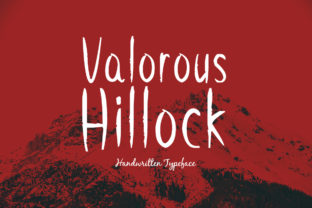
Readability is where many handwritten fonts stumble. Swashes, exaggerated connections, or inconsistent letterforms can turn elegant typography into visual noise—especially at smaller sizes or on screen. Valorous Hillock avoids this trap. Its letterforms maintain open counters, generous spacing, and subtle but consistent stroke contrast. Capital letters have presence without dominance; lowercase characters flow with natural rhythm—not forced script, but thoughtful cursive.
This isn’t accidental. Every glyph in Valorous Hillock was refined for clarity first. That means it works reliably as a website header—even on mobile—without sacrificing personality. It holds up in print at 10-point size on business cards or product tags. And because it’s carefully kerned, you won’t spend hours manually adjusting letter pairs just to make a logo feel balanced.
Where Valorous Hillock Fits—And Why It Stands Out
Think about the last time you saw a handmade soap label, a local café’s Instagram story, or a wedding invitation that felt warm but never sloppy. Chances are, a font like Valorous Hillock played a quiet but essential role. Its versatility isn’t theoretical—it’s proven across mediums:
- Logos: Works beautifully as a primary brand mark for creative studios, wellness brands, or artisanal food producers—adding warmth without undermining professionalism.
- T-shirts & apparel: Prints cleanly on fabric thanks to its moderate stroke weight and minimal fine detail—no risk of ink bleeding or losing definition.
- Print design: From flyers to posters, it scales well across formats. Pair it with a clean sans-serif (like Montserrat or Inter) for hierarchy that feels both grounded and inviting.
- Digital interfaces: Use it sparingly—but effectively—for hero section headlines, call-to-action buttons, or image slider overlays where tone matters as much as message.
- Music & publishing: Album covers, EP booklets, poetry chapbooks—all benefit from Valorous Hillock’s lyrical cadence and tactile authenticity.
Unlike some script fonts that demand heavy stylistic context (think vintage apothecary or boho festival), Valorous Hillock adapts. It feels equally at home beside minimalist Scandinavian design or rich, textured editorial layouts. That flexibility makes it a low-risk, high-reward choice—especially if you’re building a brand identity that needs to evolve over time.
Real-World Usage Tips You Won’t Find in the License File
Using Valorous Hillock well goes beyond picking the right size. Here’s what seasoned designers actually do:
- Limit it to one typographic role per layout. If it’s your headline font, don’t also use it for subheads or body copy. Let it breathe—and let a neutral companion font carry supporting text.
- Test contrast early and often. On light backgrounds, its medium-dark weight reads beautifully. On dark or busy backgrounds? Try a slight stroke expansion (via vector outlines) or a subtle white stroke effect—not a drop shadow—to preserve legibility.
- Watch the x-height. Valorous Hillock has a generous x-height, which helps readability—but also means it can dominate smaller lines of text. Avoid using it below 16px for web headers unless you’ve tested on multiple devices.
- Use OpenType features—if available. Some versions include alternate characters or ligatures. A quick toggle in Illustrator or Figma can swap a standard ‘&’ for a more fluid, hand-drawn version—small details that elevate perceived craftsmanship.
Beyond Aesthetics: What Makes Valorous Hillock Practical for Teams and Solo Creators
Design tools change. Clients change. Deadlines tighten. A font’s value isn’t just in how it looks—it’s in how smoothly it integrates into your workflow. Valorous Hillock delivers here, too:
It’s lightweight—no bloated file size slowing down your design software or web builds. It supports Latin-based languages out of the box (including accented characters used across French, Spanish, Portuguese, and German), so it’s ready for international-facing projects without extra configuration. And because it’s designed with modern rendering engines in mind, it displays consistently across Chrome, Safari, Firefox, and even legacy email clients when embedded properly.
For agencies or freelancers managing multiple client brands, Valorous Hillock is a reliable “personality booster”—a way to inject approachability without redesigning an entire system. One client used it exclusively for handwritten quote callouts in a corporate sustainability report. Another applied it only to podcast episode titles in a sleek, tech-forward UI—proving that voice and tone aren’t defined by genre alone.
Choosing the Right Handwritten Font Isn’t About Trend—It’s About Trust
People scan before they read. They decide within seconds whether something feels authentic, trustworthy, or worth their attention. Typography plays a silent but powerful role in that split-second judgment. A stiff, overly formal font can create distance. A messy, underdeveloped script can suggest carelessness.
Valorous Hillock bridges that gap. It conveys sincerity—not through perfection, but through consistency. There’s intention behind every curve and connection. That sense of craft translates directly to how audiences perceive your work: thoughtful, human-centered, and quietly confident.
That’s why it shows up on award-winning packaging, indie film posters, Shopify storefronts, and university event calendars alike. It doesn’t shout. It invites. And in an era where digital fatigue is real, that kind of gentle authority is rare—and valuable.
When You Might Want to Look Elsewhere (And That’s Okay)
Valorous Hillock shines brightest when warmth, approachability, and clarity are priorities. But it’s not a universal solution. If your project calls for ultra-narrow condensed lettering (like for tight label space), extreme decorative flair (e.g., ornate Victorian motifs), or multilingual support beyond Western European languages, you’ll want to explore alternatives. Likewise, if your brand voice leans heavily into tech, finance, or industrial themes—where precision and neutrality reign—this font may soften the message more than intended.
That said, those aren’t weaknesses—they’re boundaries. Good typography knows its role. Valorous Hillock knows exactly what it does well, and it does it with quiet mastery.
Final Thought: It’s Not Just a Font—It’s a Tone Setter
In design, every choice communicates something—even the space between letters. Valorous Hillock communicates care. Not the kind that overcomplicates, but the kind that listens, refines, and delivers with calm assurance. Whether you're launching a new product, refreshing a portfolio site, or designing a keepsake for someone’s milestone moment, it’s the kind of typeface that doesn’t distract from your message—it deepens it.
And in a world full of fleeting trends and algorithm-driven aesthetics, that kind of quiet reliability isn’t just useful. It’s essential.