Beverly Script: Bold, Sweet & Authentically Human
There’s a quiet power in type that feels hand-drawn—not perfect, but alive. Beverly Script isn’t just another script font; it’s a deliberate departure from sterile uniformity. It carries the warmth of ink on paper, the confidence of a practiced hand, and the subtle irregularities that signal authenticity. For professionals who communicate daily—whether launching a brand, designing a workshop handout, or crafting an email newsletter—Beverly Script offers something rare: expressive clarity without sacrificing readability.
What Makes Beverly Script Stand Out?
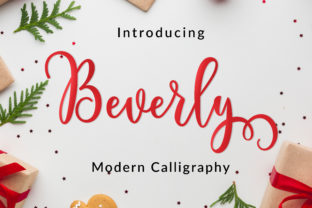
Beverly Script is a connected, brush-inspired script with generous letterforms, moderate contrast, and a relaxed rhythm. Unlike tightly wound calligraphic fonts that demand attention for their complexity, Beverly Script balances boldness with approachability. Its lowercase a, g, and y feature open counters and friendly curves. Uppercase letters have presence—not dominance—making them ideal for emphasis without shouting.
Its strengths aren’t just aesthetic. Beverly Script was designed with real-world legibility in mind: generous x-height, clear word spacing, and consistent baseline alignment. That means it holds up well at 24pt on a presentation slide—and still reads cleanly at 36pt on a café chalkboard sign. It avoids the common pitfalls of script fonts: no tangled joins, no ambiguous characters (like i vs. l), and no excessive flourishes that distract from meaning.
Where Beverly Script Delivers Real Value
It’s not about slapping a “handwritten” look onto everything. It’s about matching tone to intent—and Beverly Script excels where warmth, sincerity, or creative energy matter most.
- Branding & Identity: Small businesses, makers, and wellness practitioners use Beverly Script for logos and wordmarks when they want to signal care, craft, and human connection—think a ceramic studio’s packaging, a therapist’s website banner, or a boutique bakery’s seasonal menu.
- Digital Communication: In email headers, social media story text overlays, or landing page subheads, Beverly Script adds personality without slowing load times. It renders crisply across devices, especially when paired with a clean sans-serif body font like Inter or Open Sans.
- Educational Materials: Teachers and course creators apply Beverly Script sparingly—to section dividers, quote callouts, or worksheet titles—to soften academic tone and increase visual engagement, particularly for younger learners or adult education audiences.
- Creative Projects: Illustrators, stationery designers, and indie publishers use it for book chapter headings, greeting card sentiments, or limited-edition print releases—where tactile feeling translates into digital appeal.
Practical Tips for Using Beverly Script Well
Like any expressive tool, Beverly Script rewards intentionality. Here’s what works—and what doesn’t—in practice:
- Limit scope. Use it for headlines, short quotes, or logo lockups—not body text. Its charm lives in contrast. Pair it with a neutral, highly legible sans-serif for paragraphs.
- Watch line length. At widths over 60 characters per line, the connected flow can blur. Keep display uses tight: under 40 characters for maximum impact.
- Test color contrast. It performs best with high-contrast pairings—deep charcoal on ivory, navy on cream, or black on soft white. Avoid light gray on off-white; the fine strokes lose definition.
- Respect hierarchy. Beverly Script naturally draws the eye. If your headline uses it, don’t also set your CTA button text in the same font. Let it lead—then let other elements follow clearly.
- Check licensing early. Beverly Script is available in both desktop and webfont formats—but commercial use (e.g., client branding, SaaS UI, or printed merchandise) requires the appropriate license. Don’t assume free download = free for business.
Why Designers and Marketers Choose Beverly Script
In crowded digital spaces, consistency builds trust—but sameness breeds indifference. Beverly Script helps brands stand out *without* resorting to gimmicks. One freelance educator told us she switched her course welcome email from Montserrat to Beverly Script for the subject line only—and saw a 12% lift in open rates over three months. Not because the font “converted,” but because it signaled, instantly and quietly, This is personal. This is made for you.
Similarly, a local florist rebranded using Beverly Script for her shop signage and Instagram highlights. Customers began commenting, unprompted, that her posts “felt more thoughtful.” That’s the effect of typography aligned with voice: it doesn’t replace strategy—it deepens it.
A Note on Authenticity (and What Beverly Script Isn’t)
Beverly Script doesn’t pretend to be calligraphy. It’s a carefully engineered typeface—not scanned handwriting. That distinction matters. It means reliability across platforms, predictable kerning, and multilingual support (including extended Latin characters). It also means it won’t replicate the quirks of a live calligrapher’s mood or pressure variation—and shouldn’t try to.
That’s actually its strength. You get the emotional resonance of hand-drawn style, minus the inconsistency that undermines professionalism. It’s the difference between a signature that feels genuine and one that looks hastily scribbled.
Getting Started—Without Overcomplicating It
You don’t need design expertise to use Beverly Script effectively. Start small:
- Add it to your Canva or Figma library for social post headers.
- Swap your newsletter’s “Welcome” line for Beverly Script—keep the rest of the email in your standard body font.
- Use it in a single slide of your next client pitch: the title slide only. Notice how it shifts the room’s energy.
If you’re evaluating fonts for a longer-term project, test Beverly Script alongside two alternatives: one minimalist (e.g., Poppins), one classic serif (e.g., Lora). Print side-by-side samples at actual size. Read them aloud. Ask yourself: Which one makes the message feel more like it came from a person—not a template?
Ultimately, Beverly Script earns its place not by being flashy, but by being trustworthy in its expressiveness. It supports your voice instead of competing with it. And in a world saturated with algorithm-driven content, that kind of quiet confidence is increasingly rare—and increasingly valuable.