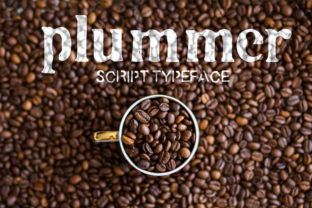
Plummer Font: A Handcrafted Stencil-Inspired Typeface for Retro Design Lovers
Typography is more than just letters on a page—it’s visual storytelling. Among the many fonts that evoke nostalgia, Plummer stands out as a distinctive, handmade typeface rooted in industrial charm and mid-century aesthetics. Designed with intention and crafted by hand, Plummer isn’t just another digital font—it’s a celebration of texture, authenticity, and retro design sensibility.
What Is the Plummer Font?
Plummer is a bold, uppercase-only display font inspired by vintage stencil lettering—think military equipment labels, warehouse signage, and 1940s–1960s industrial tags. Unlike mass-produced sans-serifs or overly polished digital fonts, Plummer embraces subtle imperfections: uneven stroke weights, slight irregularities in character alignment, and organic spacing that mimics hand-cut stencils.
Each glyph was drawn manually before digitization, preserving the human touch that gives the font its warmth and character. It’s not a “perfect” font—and that’s precisely why designers love it. Its authenticity makes it ideal for projects where personality matters more than precision.
The Origins: Why Stencil Lettering Inspired Plummer
Stencil typography has deep historical roots. Before digital printing, stencils were practical tools—fast, reusable, and legible at a distance. Armies used them to mark crates and vehicles; factories labeled machinery; even early advertising leaned into their stark, no-nonsense clarity.
Plummer honors that legacy—not as a sterile replica, but as a thoughtful reinterpretation. Its uppercase-only structure reflects the functional limitations of traditional stencils (lowercase letters are harder to cut and read), while its generous x-height and open counters ensure strong legibility—even at smaller sizes or on textured surfaces like wood, concrete, or fabric.
Key Visual Traits of Plummer
- Uppercase-only design — reinforces its stencil heritage and maximizes impact
- Hand-drawn texture — subtle variations in line weight and edge roughness add tactile realism
- Generous spacing — improves readability in headlines, posters, and signage
- No lowercase, no italics, no bold variants — intentional minimalism that encourages creative layering and color use instead
Where Does Plummer Fit in Modern Design?
In today’s hyper-digital landscape—where sleek minimalism and AI-generated visuals dominate—Plummer offers a refreshing counterpoint. It’s not about rejecting technology; it’s about reintroducing humanity into design. Businesses, creatives, and educators alike are discovering how this font bridges nostalgia with contemporary relevance.
Branding & Small Business Identity
Small cafes, craft breweries, vintage clothing shops, and independent bookstores often use Plummer to signal authenticity and craftsmanship. For example, a coffee roaster might feature “PLUMMER ROAST CO.” across its bag design—not just as text, but as a visual promise of care, tradition, and hands-on quality. The font doesn’t shout; it invites curiosity and trust.
Digital & Social Media Use
Despite its analog roots, Plummer thrives online. When used thoughtfully—as a headline over clean body text or layered over grainy photo backgrounds—it adds depth and mood without sacrificing clarity. On Instagram or Pinterest, where visual first impressions matter, Plummer helps posts stand out in feeds saturated with generic fonts.
Educational & Creative Projects
Design educators use Plummer to teach principles of typographic hierarchy, contrast, and historical context. Students learning about mid-century American graphic design or wartime communication often explore stencil fonts like Plummer to understand how form follows function—and how constraints spark creativity.
Common Misconceptions About Plummer
Because Plummer looks “rough,” some assume it’s low-quality or outdated. In reality, its imperfections are deliberate and technically sophisticated—each glyph balances visual rhythm with structural integrity. It’s not meant for long paragraphs or UI interfaces, but that’s not a flaw—it’s a feature.
Another misconception is that stencil-inspired fonts lack versatility. On the contrary, Plummer pairs beautifully with clean, modern sans-serifs (like Inter or Montserrat) or warm serif companions (such as Playfair Display). Its strength lies in contrast: pairing raw texture with refined simplicity creates memorable visual harmony.
How to Use Plummer Effectively (Without Overdoing It)
Like any strong personality, Plummer works best when given space to breathe. Here are practical tips for real-world application:
- Reserve it for headlines and logos — avoid using it for body copy, captions, or navigation menus
- Embrace negative space — let the font’s bold shapes shine by surrounding them with ample margin and clean backgrounds
- Play with color, not weight — since Plummer has no bold or italic versions, experiment with duotones, gradients, or split-color fills to add emphasis
- Pair wisely — choose supporting fonts with neutral proportions and high legibility to let Plummer lead the visual narrative
- Test print and screen rendering — due to its textured edges, preview how it appears on different devices and paper stocks before finalizing
Plummer in Context: Beyond Aesthetics
Typography influences perception more than most realize. Studies in cognitive psychology suggest that fonts associated with authenticity and craftsmanship—like Plummer—trigger subconscious associations with reliability, heritage, and attention to detail. That’s why brands investing in emotional connection often turn to typefaces with clear origin stories and tangible making processes.
In education, Plummer serves as a gateway to broader conversations: about material culture, design ethics, and the value of slow, intentional creation in an age of speed and automation. It reminds us that every font carries history—and every choice we make as communicators carries meaning.
Who Should Consider Using Plummer?
Plummer resonates most with creators who value:
- Story-driven design — where typography supports narrative, not just decoration
- Authentic brand voice — especially for lifestyle, artisanal, or heritage-focused businesses
- Print-first workflows — such as posters, packaging, zines, or event signage
- Teaching typography fundamentals — as a case study in form, function, and cultural resonance
It may not be the right fit for tech startups seeking futuristic sleekness—or legal firms prioritizing conservative neutrality. But for those building something with soul, Plummer offers both aesthetic distinction and conceptual grounding.
Final Thoughts: More Than Just a Font
Plummer is a reminder that great design doesn’t always mean “polished.” Sometimes, it means honest. Sometimes, it means handmade. And sometimes, it means choosing a font not because it’s trendy—but because it aligns with your values, your story, and your audience’s experience.
Whether you’re launching a new product, designing a classroom poster, or crafting a personal portfolio, Plummer invites you to slow down, consider context, and prioritize meaning over mere appearance. In doing so, it becomes more than typography—it becomes a quiet act of intentionality in a noisy world.
If you're exploring retro-inspired fonts for your next project, ask yourself: Does this choice reflect who I am—or who I want to become? With Plummer, the answer often begins with a single, confident, hand-drawn letter.