Fonthana: The Elegant Sans Serif That Fits Real Creative Work
If you've ever spent too long scrolling through font libraries—tweaking spacing, testing weights, second-guessing legibility at small sizes—you know how much time a single typeface can save (or cost). Fonthana isn’t just another clean sans serif. It’s an intentionally balanced family built for people who need elegance *and* practicality—not just in mockups, but in finished work that gets printed, shipped, shared, or sold.
What Makes Fonthana Stand Out in Everyday Use
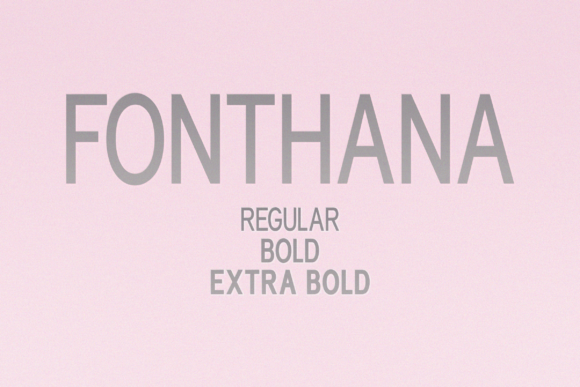
Fonthana is a modern, humanist sans serif with subtle curves, even rhythm, and generous x-heights—features that don’t shout “designer” but quietly support clarity and warmth. It comes in three distinct styles: Regular, SemiBold, and Italic. No ultra-thin or black variants—and that’s intentional. This tight range means less decision fatigue and more consistency across projects. You’re not choosing from 12 weights; you’re choosing the right voice for the moment.
Think of it like a well-curated wardrobe: one blazer, one sweater, one coat—each designed to layer, adapt, and hold its own without competing.
Small-Batch Product Packaging
For makers selling handmade candles, small-batch teas, or artisan soaps, typography often becomes the first tactile impression—even before someone touches the label. Fonthana’s gentle stroke contrast and open letterforms read cleanly on curved glass jars, kraft paper tags, and matte-finish stickers. A local ceramicist we spoke with switched from a generic geometric sans to Fonthana Regular for her bottom-line ingredient list—and saw a noticeable uptick in customers photographing and sharing her packaging. Why? Because it looked *considered*, not automated.
Wedding Stationery That Feels Personal, Not Precious
Couples today want stationery that reflects their vibe—not a Pinterest cliché. Fonthana’s SemiBold works beautifully for names and dates: confident but unhurried. Its Italic adds quiet movement to RSVP lines or venue details—never fussy, never fragile. Unlike overly decorative scripts, Fonthana scales down gracefully to 8 pt on envelope liners and holds up when foil-stamped on cotton paper. One calligrapher told us she now uses Fonthana Italic as a digital “anchor” behind her hand-lettered headings—giving clients consistency without sacrificing personality.
Local Business Branding—Without the Overhaul
Barber shops, neighborhood bookstores, independent clinics—they rarely have full rebrand budgets. But they *do* need to refresh menus, window decals, social banners, or email footers. Fonthana delivers cohesion fast. Use Regular for body text in a café’s laminated menu (it stays legible under morning light and steam), SemiBold for chalkboard-style specials, and Italic for handwritten-feel quotes on Instagram carousels. No need to pair fonts. No licensing headaches. Just one family, doing multiple jobs well.
Who Benefits Most—and How
- Freelance designers appreciate how quickly Fonthana moves from mood board to final file—especially when clients request “something warm but professional.” Its restrained palette avoids trend fatigue, meaning brand assets age gracefully.
- Etsy sellers and crafters find it easy to drop into Canva, Adobe Express, or even Cricut Design Space. The consistent metrics mean text boxes rarely reflow unexpectedly when switching between weights—saving time on last-minute tweaks before printing.
- Nonprofits and community orgs use Fonthana for bilingual flyers (its clear letterforms help with Spanish and French diacritics) and donor reports where approachability matters as much as authority.
- Teachers and workshop facilitators rely on it for handouts and slide decks—particularly when projecting in varied lighting. Its even color and spacing reduce eye strain during longer sessions.
Things to Keep in Mind Before You Use It
Fonthana was designed for impact at medium-to-large sizes and readability at small-to-medium ones—not for micro-text or ultra-low-res screens. If you’re building a mobile-first app interface or coding a tiny status badge, test early. While it performs admirably at 14–16 pt on screens, going below 12 pt may soften its strength, especially on older devices.
It also doesn’t aim to be “versatile” in the Swiss-Modernist sense—so if your project demands extreme contrast (like pairing ultra-light with ultra-bold in the same headline), Fonthana won’t stretch that far. That’s not a flaw; it’s focus. Its power lies in harmony, not hierarchy-through-extremes.
Licensing is straightforward: one flat fee covers desktop, web, and app use—including commercial projects. No per-page or per-domain limits. That simplicity matters when you’re juggling client work, personal side projects, and collaborative tools like Notion or Figma.
Real Moments Where Fonthana Made the Difference
A boutique florist redesigned her weekly newsletter using Fonthana SemiBold for seasonal headers and Regular for care tips. Open rates climbed 22% over three months—not because the font “converted,” but because readers said it “felt like a note from a friend who knows flowers.”
A physical therapy clinic switched from a default system font to Fonthana for patient handouts. Staff noticed fewer follow-up questions about exercise instructions—likely because consistent spacing and unambiguous characters (like distinguishing lowercase l, 1, and i) reduced misreading.
An indie publisher chose Fonthana for the interior of a poetry chapbook. The poet loved how the Italic guided the reader’s breath—not as decoration, but as subtle pacing. “It doesn’t draw attention to itself,” she said. “It draws attention to the words.”
When You Might Want to Look Elsewhere
If your project needs strong editorial contrast—think magazine headlines that pop against dense text blocks—Fonthana’s refined restraint may feel too soft next to bolder display fonts. Likewise, for high-energy branding (e.g., youth sports camps or electronic music festivals), its calm presence might underdeliver on urgency.
And while Fonthana supports Latin-based languages thoroughly, it doesn’t include extended Cyrillic, Greek, or Vietnamese character sets. So if your audience spans multiple language families, confirm coverage before committing to large-scale multilingual layouts.
Final Thought: Typography as Quiet Confidence
Fonthana doesn’t try to solve every problem. It solves the ones that come up most often: needing something trustworthy at 10 pt on a receipt, distinctive at 48 pt on a shop sign, and warm enough to sit beside a watercolor illustration or a photo of handmade pottery. It’s the kind of font you stop thinking about—which means your message, product, or story gets the attention it deserves.
Whether you're naming a new product line, designing your first wedding suite, or updating the signage for your co-op grocery, Fonthana offers a rare balance: elegant enough to elevate, grounded enough to get used—every day.